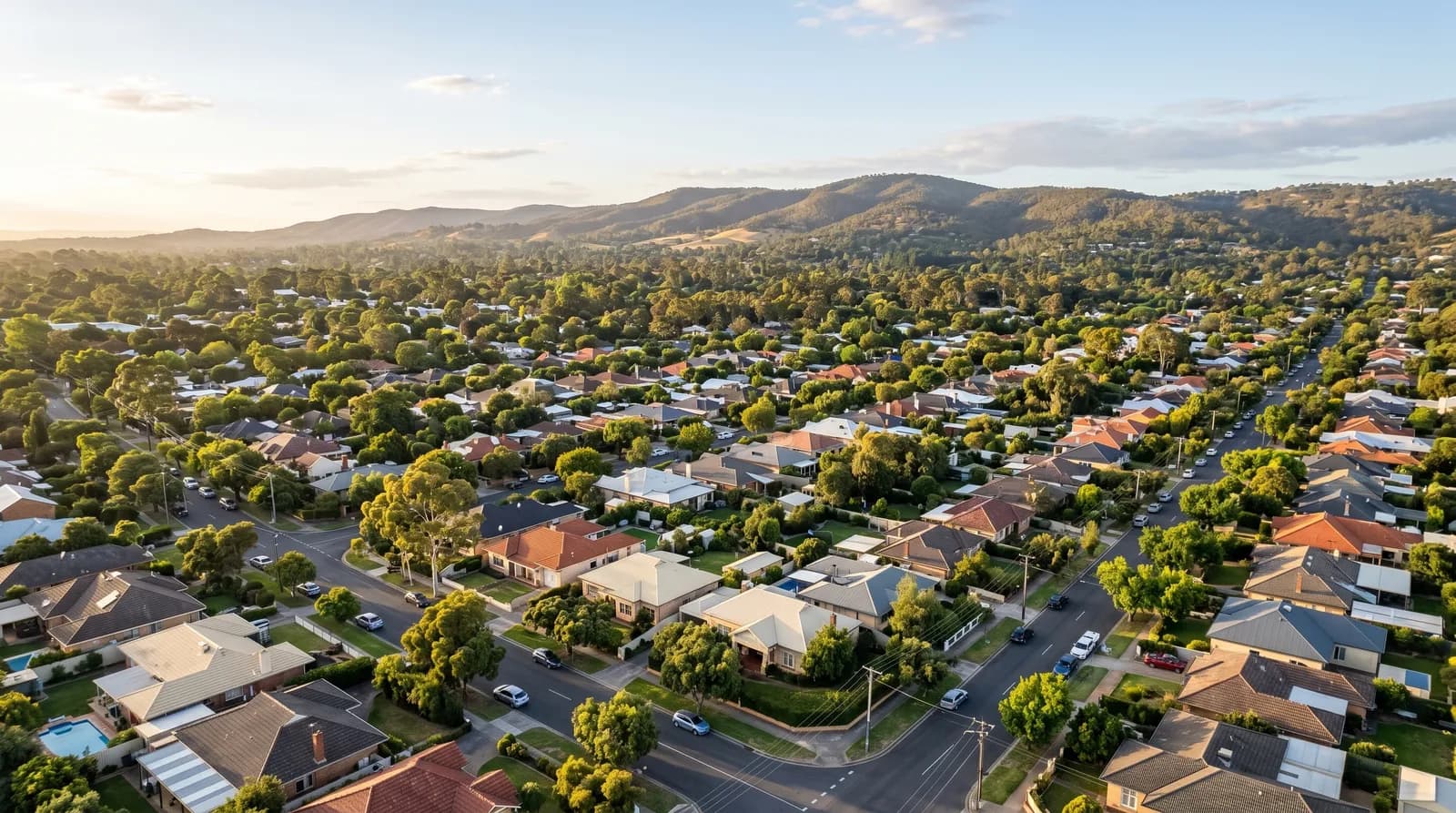
In the north-east, the school catchment a home sits in can move its price as much as the home itself. Here’s how zones work — and why buyers pay for the right one.
Ask any local agent why two similar homes a street apart can sell for noticeably different prices, and school zones will often be part of the answer. In family-driven suburbs like Golden Grove, being inside a sought-after catchment is something buyers will genuinely pay for — which makes understanding zones important whether you’re buying or selling. It’s one of those quiet forces in the north-east market: rarely talked about in headlines, but front of mind for the parents inspecting your home on a Saturday morning.
Stephen has lived and worked in the Golden Grove and Greenwith area for more than twenty years, and in that time he’s watched school catchments shape buyer behaviour again and again. This guide explains how zones work, why they influence value, and the practical steps to confirm exactly where a property sits — so you can make decisions on facts rather than assumptions.
Why zones move prices
Government high schools enrol students based on where they live, set by a zone (catchment) that follows specific streets. Because places at popular schools are tied to address, demand concentrates on homes inside those zones — and that demand shows up in price. For families, securing the right zone can shape years of schooling, school friendships and even logistics like walking distance and after-school commitments, so it’s a powerful motivator that often outranks an extra bedroom or a renovated kitchen.
The effect is strongest where a school has a strong reputation and limited capacity. When out-of-zone enrolments are capped, the only reliable way for a family to secure a place is to live within the boundary. That turns a catchment into something close to a feature of the home itself — and buyers compete accordingly. In a tightly held pocket, it can be the difference between a single interested family and three or four bidding against each other.
Key catchments in the area
The north-east is served by several well-regarded secondary schools, and knowing roughly which areas feed into each one helps frame a buying or selling decision. Always treat the list below as a starting point, not a guarantee — boundaries are set street by street and reviewed by enrolment year.
- Golden Grove High School — serving much of Golden Grove, and part of the shared secondary campus alongside Gleeson College and Pedare Christian College, often referred to as a combined or “One+” campus.
- Banksia Park International High School — a well-regarded school drawing families across Banksia Park, St Agnes, Vista and surrounds.
- Modbury High School — the zoned school for parts of the area including Highbury and nearby streets.
Because these schools sit close together, the boundaries between their zones can run right through a suburb — and sometimes down the middle of a single street. That’s exactly why two neighbouring homes can fall into different catchments, and why it’s never safe to assume a property is zoned for a particular school simply because it’s nearby.
The shared secondary campus, explained
One thing that surprises buyers new to the area is the shared campus arrangement at Golden Grove. Golden Grove High School (a government school), Gleeson College (Catholic) and Pedare Christian College (Uniting Church) sit together on adjoining grounds and share some facilities, while operating as separate schools with their own enrolment policies. For families, that means a single, convenient location offers a government and two independent options — a genuine drawcard that many local parents value highly when choosing where to buy.
The independent colleges enrol on their own terms rather than by residential zone, so being nearby is a convenience rather than a guarantee of a place. The government high school, by contrast, is the one tied to a catchment. It’s worth understanding the distinction so you weigh the right factor for the school you actually have in mind.
How to check a property’s zone
Never assume — always confirm. School zones are set by street and can change each enrolment year, so a neighbour’s zone isn’t a guarantee of yours, and last year’s boundary isn’t a guarantee of this year’s. Check the exact address using the South Australian Department for Education’s official school zone finder before relying on a catchment in your buying or selling decision.
- Search the precise street address, not just the suburb — boundaries can split a street.
- Confirm the result for the enrolment year that matters to you, as zones are reviewed over time.
- If you’re looking at independent or private schools, check their enrolment policy directly rather than relying on a zone.
- Keep a copy of what you find, so the information is clear for everyone involved in the decision.
If you’re buying, doing this homework early avoids disappointment and helps you focus your search on the streets that genuinely qualify. If you’re weighing up suburbs more broadly, our guide to buying in Golden Grove is a useful companion to the official zone finder.
Beyond the high school: primary zones and other factors
Secondary school zones get the most attention, but primary school catchments matter to younger families too, and they follow their own boundaries. The same rule applies — confirm the exact address rather than assuming the local primary feeds where you expect. For families planning years ahead, it’s worth checking both the primary and secondary zones a home falls into, since they don’t always line up neatly and a move that suits one stage of schooling may need revisiting later.
Zones are also only one part of what makes a location desirable. Proximity to parks, reserves, the Golden Grove Village and Stables shopping precincts, public transport, and quiet, well-kept streets all feed into how buyers value a home. A great catchment on a busy through-road won’t carry the same premium as the same zone on a leafy cul-de-sac. When Stephen appraises a home, he weighs the zone alongside these everyday liveability factors rather than treating it in isolation.
How catchments can change over time
It’s easy to think of a school zone as fixed, but boundaries are reviewed and can shift between enrolment years as schools manage capacity and as new housing changes the make-up of an area. A street that sits comfortably inside a zone today may be reviewed in future, and occasionally a boundary is adjusted. This is precisely why the advice to check the official finder for the relevant enrolment year matters — and why neither a buyer nor a seller should treat a catchment as a permanent fixture of a property.
For most families this isn’t cause for alarm; popular schools and their core catchments tend to stay broadly stable. But it’s a sensible reason to verify rather than rely on word of mouth, an old listing, or what a neighbour remembers from a few years back. If a school place is central to your plans, build a little flexibility into your thinking and confirm the current position before you commit.
What it means for sellers
If your home sits in a sought-after zone, that’s a genuine selling point worth highlighting to the right buyers — and pricing accordingly. Families chasing a particular school are often motivated and ready to act, so reaching them clearly in the marketing can lift competition on the day. Stephen knows the local catchments well and how to position a home to the buyers actively chasing them, without overstating anything that can’t be confirmed.
A sensible approach is to confirm the current zone, mention it factually in your marketing alongside a reminder for buyers to verify their own address, and let the school proximity speak for itself in photos and inspections. It’s one ingredient in a strong campaign rather than the whole story — presentation, timing and pricing still matter. For more on local values, read how much your home is worth, and if you’re weighing up timing, the best time to sell guide is worth a look. When you’re ready, a property appraisal will put a realistic figure on what your home — and its location — is worth today.
Pricing a home in a desirable zone
Pricing a home that sits in a sought-after catchment takes a little nuance. The zone can add genuine appeal, but it doesn’t replace the fundamentals — land size, condition, layout, street and overall presentation still set the bulk of the value. The art is recognising when a desirable zone is likely to bring extra competition, and setting a price and method of sale that lets that competition play out rather than capping it too early.
Stephen draws on recent comparable sales across the Golden Grove area to judge where a home should sit, then factors in the catchment as one influence among several. Over-relying on a zone to justify an ambitious price can backfire if the buyers simply aren’t there at that level; pricing sensibly and marketing the school appeal clearly is usually what brings the motivated families to the table. If you’d like to understand how local value is assessed in detail, the guide on how much your home is worth is a good companion to this article, and you can always book a property appraisal for a figure specific to your home.
What it means for buyers
If a particular school is central to your plans, let it shape your search from the start rather than discovering a zoning issue after you’ve fallen for a home. Build a shortlist of qualifying streets, confirm each address, and factor the premium into your budget so you’re not caught out at auction. Remember too that priorities change — a home that suits you for a school zone today should still stack up on the fundamentals of land, layout and lifestyle for the years beyond. Browsing recently sold homes in the area can give you a feel for how much a desirable catchment is really adding to local prices.
As a guide, the Golden Grove median sits at around $926,000 (being verified), and the right zone can be part of why a well-located home reaches the upper end of its range. Treat any figure as a starting point and lean on local advice for the specific street and property you’re considering.
In a sought-after school zone, or hoping to buy into one? Talk to Stephen for honest local advice and a free, no-pressure [appraisal](/property-appraisal).
Book a Free AppraisalRelated questions
Do school zones affect house prices in Golden Grove?
Yes. In family-driven suburbs like Golden Grove, homes inside sought-after government school catchments attract extra buyer demand, which can lift prices compared with otherwise similar homes outside the zone. The effect is strongest where a school is well regarded and out-of-zone places are limited.
How do I check which school a Golden Grove home is zoned for?
Use the South Australian Department for Education’s official school zone finder and enter the exact address. Zones are set by street and can change each enrolment year, so always confirm rather than relying on a neighbouring property’s zone or last year’s boundary.
What is the shared campus at Golden Grove?
Golden Grove High School, Gleeson College and Pedare Christian College sit on adjoining grounds and share some facilities while operating as separate schools. The government high school enrols by zone, while the two independent colleges enrol on their own terms, so being nearby is a convenience rather than a guaranteed place.
Should I market my home’s school zone when selling?
If your home sits in a desirable catchment, it’s a genuine selling point worth mentioning factually, alongside a reminder for buyers to confirm their own address with the official zone finder. Stephen can help position the home to the families actively seeking that school without overstating anything that can’t be verified.
How much does a good school zone add to a home’s value?
There’s no fixed figure — it depends on the school’s reputation, how limited places are, and overall demand at the time. As a guide, the Golden Grove median sits at around $926,000 (being verified), and a sought-after zone can be one reason a well-located home reaches the upper end of its range. A local appraisal is the best way to gauge the effect for a specific property.